Blog
Google and Bing now report AI visibility. What are they still not telling you?
· 7 min read · by Zakarya Chami
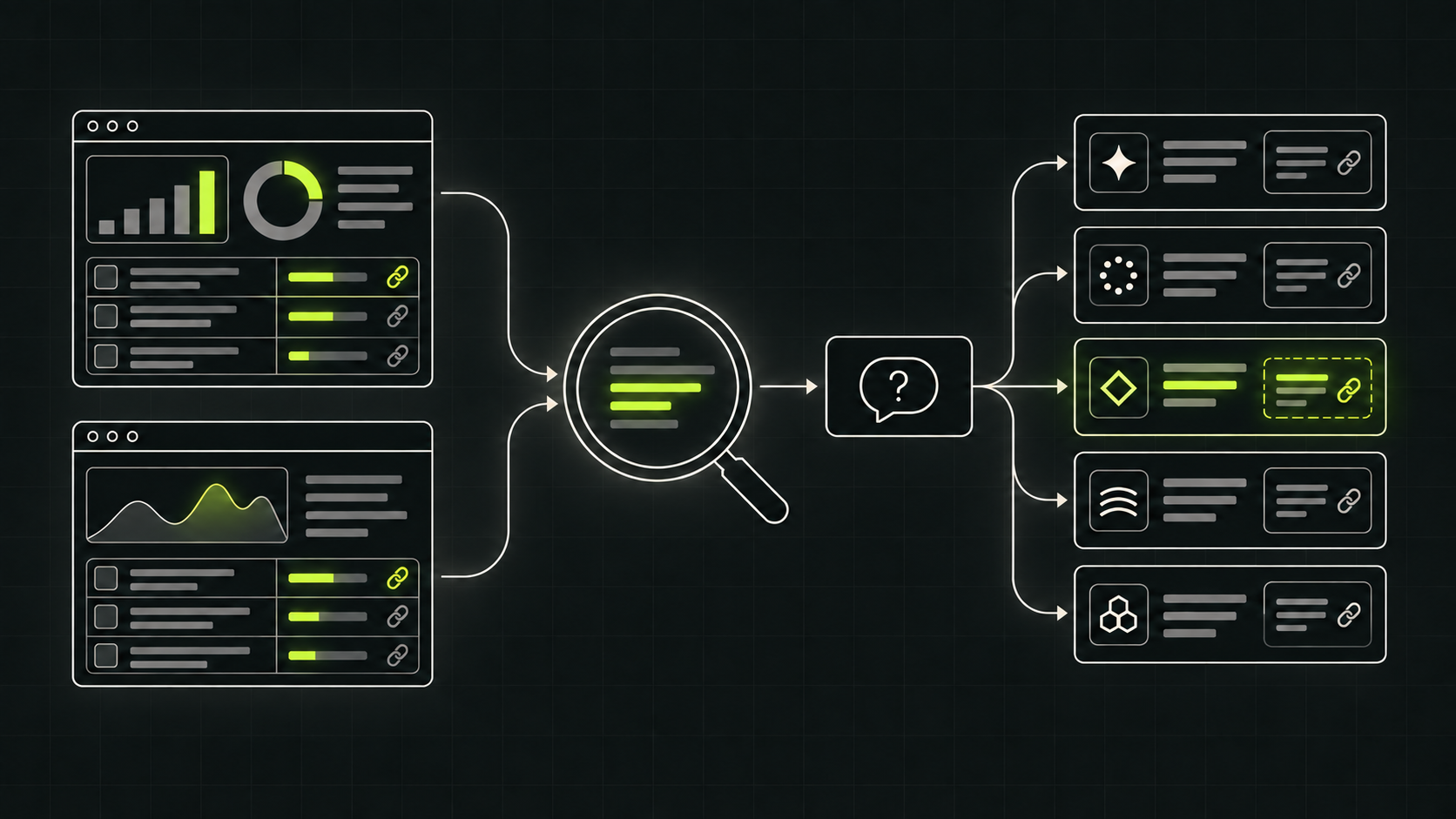
AI visibility is becoming measurable inside the search engines themselves. Google Search Console now has a dedicated view for appearances in generative AI features. Bing Webmaster Tools has an AI Performance report for citations across Microsoft's AI experiences. This is a meaningful change: site owners no longer have to infer every AI appearance from referral traffic or a screenshot.
But these dashboards answer a different question from an SEO + GEO audit. They show how your pages performed across a provider's surfaces. They do not fully explain what a buyer was trying to decide, what the answer said about you, which competitor occupied the shortlist, or what your team should change next. The right response is not to choose one measurement system. It is to use each for the job it can actually do.
What Google now shows
Google announced dedicated generative AI performance reports in Search Console in June 2026 and says they became available to all websites worldwide on 31 August 2026. The reports cover visibility in features such as AI Overviews and AI Mode, with views for impressions, pages, countries, devices and dates. That makes Search Console the first place to check whether URLs from your site are appearing in Google's AI search experiences and whether that exposure is changing over time.
This is first-party platform data, which is its strength. It can reveal scale and trends that a small prompt sample cannot. It is still Google data. It does not tell you how the same commercial question was answered by ChatGPT, Claude, Gemini or Perplexity, and an impression does not by itself say that your brand was recommended accurately.
What Bing now shows
Bing's AI Performance report takes a citation-oriented view. It reports total citations, average cited pages, page-level citation activity, trends and a sample of the grounding queries used to retrieve content across Microsoft Copilot, AI-generated summaries in Bing and selected partner integrations. That helps a publisher find which URLs are being reused as sources and which retrieval themes lead to them.
Bing also gives an important warning: citation totals and average cited pages do not indicate ranking, authority, placement or the role a page played in an individual answer. A page can be cited without your company becoming the recommendation. It can support a minor factual sentence while another business wins the shortlist.
A citation count is not a buyer answer
Imagine a UAE advisory firm sees ten citations to its company-formation guide. That is useful evidence, but it leaves four commercially important questions open:
- Which decision did the source help answer?An informational query about licence types is not the same as "Which adviser should help me establish the company?"
- Was the brand named, linked or merely used? A source can ground an answer without the company appearing in the recommendation itself.
- Who appeared instead? A provider dashboard can show activity for your own pages without reconstructing the competitor shortlist surrounding a specific buyer question.
- Was the answer correct? Visibility is not automatically positive. An assistant may repeat an outdated service, an old price or a claim that your page does not support.
Those are not defects in Search Console or Bing Webmaster Tools. Aggregate platform reporting is designed to measure platform activity. Buyer-question monitoring is designed to inspect the answer itself.
Use three layers of evidence
A practical AI visibility measurement stack has three layers:
- Provider dashboards for scale.Use Google and Bing's first-party reports to see impressions, cited pages, geography, devices, retrieval themes and longer-term platform trends.
- Controlled buyer prompts for context. Repeat the questions prospects actually ask. Record the engine, date, answer, brands named and cited sources. This reveals whether visibility reaches the commercial decision, not only whether a URL appeared somewhere.
- Analytics and business outcomes for value. Track qualified visits, enquiries, sign-ups and sales. Some useful AI exposure will not produce a click, while some low-volume referrals will arrive after the buyer has already compared options. Do not force every signal into a last-click traffic metric.
Add a dated change log beside those layers. When a page is updated, record the buyer question, the evidence added and the expected signal. If visibility changes later, you have a plausible hypothesis to test rather than a claim of causation based on timing alone.
What to do with the combined view
- Google impressions rise, but priority prompts still omit you: your pages may have broad informational exposure without entering the buying shortlist. Improve the pages that explain fit, differentiation and proof for those decisions.
- Bing citations concentrate on one old URL: update that source, check its claims and link it clearly to the relevant product or service page.
- One engine cites you and four do not: compare crawler access, indexed sources and the way each answer is grounded before rewriting the content.
- You are named but described incorrectly: correct the primary page and the independent sources that repeat the error, then monitor the same prompt across later runs.
Google's current guidance is deliberately unglamorous: foundational SEO still matters, and unique, expert-led, non-commodity content is more useful than recycling information that already exists. Native reports tell you whether that work is surfacing. Repeated prompt observations help you judge whether it is surfacing for the decisions your customers make.
Do not replace Search Console. Complete it.
Neoval is not a substitute for Google Search Console, Bing Webmaster Tools or your analytics. Its role is to examine the layer those tools cannot fully show: fixed buyer questions across ChatGPT, Claude, Gemini, Perplexity and Google AI Overview, including citations and competitor appearances. The result becomes a prioritized action plan that can be checked again on the next run.
Start with the free audit for a one-domain ChatGPT snapshot, or compare the monthly and weekly monitoring options on the pricing page. No audit or dashboard can guarantee a citation. Together, they can replace guesswork with a clearer chain from exposure to answer to business result.